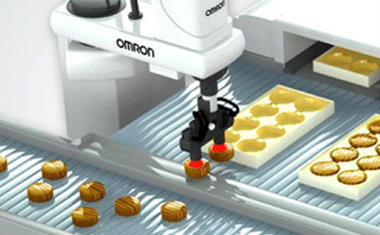
Automation is a growing trend in the industry, and pick and place robots have become an essential part of this process. These revolutionary systems are designed to perform object handling and placement tasks with precision and efficiency. In this article, we will explore what pick and place robots are, how they work, their applications in different sectors, and the advantages they offer over other similar systems.
What Are Pick and Place Robots?
Pick and place robots are automated machines designed to pick up objects from one location and place them in another with precision. These robots are widely used in the manufacturing and assembly industries, as well as in other sectors requiring repetitive handling tasks. They use a combination of sensors, actuators, and advanced software to perform these tasks with high accuracy and speed.
How Pick and Place Systems Work
Pick and place systems operate by following a series of predefined steps. They use sensors to identify the position and orientation of the objects to be picked up. Then, the robot uses a gripping device, such as a clamp or a suction cup, to securely hold the object. Next, the robot moves to the destination while holding the object and, once there, it releases it with precision. This process is repeated continuously and quickly, enabling efficient handling tasks in various industrial environments. Below is a step-by-step sequence of how pick and place robots typically work:
- Detection: Sensors identify the position and orientation of the objects to be picked up.
- Gripping: The robot uses a gripping device, such as a clamp or suction cup, to securely grasp the object.
- Transport: The robot moves to the destination while holding the object.
- Placement: Once at the desired location, the robot releases the object precisely.
- Repetition: These steps are repeated continuously and quickly for efficient task execution.
What Is Needed to Install Pick and Place Robots?
Installing pick and place robots requires thorough planning and consideration of several essential components. To ensure successful implementation, it is necessary to select the right robot for the specific task and industry, taking into account load capacity, reach, speed, and required precision; design a complete automation system that includes the robot, gripping devices, sensors, and actuators; program the robot for the specific tasks; incorporate sensors and, in some cases, machine vision to detect objects and verify quality; implement safety systems such as light curtains and emergency stops; provide an intuitive user interface for robot control and ensure proper training for the staff operating and maintaining the equipment; integrate the robot into the existing production line; establish a regular maintenance program; and continuously monitor performance to optimize operational efficiency and quality.
Main Applications and Activities of Pick and Place Robots
Pick and place robots have a wide range of applications in various industrial sectors, significantly improving efficiency and accuracy across different activities. In the electronics industry, they are used to assemble components on printed circuit boards and handle test and assembly equipment. In the food sector, they manage the handling and packaging of products, ensuring hygiene and presentation. In automotive manufacturing, these systems are used to precisely assemble parts and handle components on production lines. In the pharmaceutical industry, they are used for selecting and packaging pharmaceutical products, ensuring precision and safety in the process. Additionally, in warehouses and distribution centers, pick and place robots automate the loading and unloading of packages, speeding up goods handling processes. These applications demonstrate the versatility and positive impact of these robots across industries, boosting productivity and efficiency throughout the sector.
Advantages Over Other Systems
Pick and place robots offer several advantages over other handling systems such as manual transport and assembly systems:
- Precision: These robots are highly precise and can place objects with millimeter-level accuracy in every cycle, reducing errors and waste.
- Speed: The operating speed of pick and place robots is impressive, boosting efficiency and output.
- Cost Reduction: Automating handling tasks reduces the need for manual labor, lowering long-term labor costs.
- Flexibility: They can adapt to different object sizes and shapes, making them versatile for a wide range of applications.
- Safety: Automation reduces workers’ exposure to repetitive and hazardous tasks, improving workplace safety.