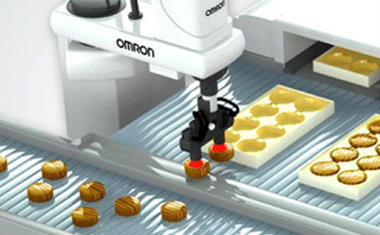
PLCs (Programmable Logic Controllers) are crucial devices in the world of industrial automation. These advanced tools play an essential role in numerous industrial processes, facilitating the management and automation of machinery and entire systems. Below, we will explore in detail what PLCs are, how they work, their main components, and the advantages they offer over other control systems.
What are PLCs?
A PLC is a type of specialized computer used in industrial environments to control processes. These devices are designed to operate under harsh conditions such as high temperatures, vibrations, and contaminated environments. Their function is to receive information from process sensors or inputs, process it according to a preset program, and issue commands through their outputs. This process helps automate repetitive and complex tasks in industry.What is a programmable logic controller used for?
The use of a programmable logic controller is ideal for automating processes in various areas such as manufacturing, energy production, material handling, building automation, and more. These controllers can simplify complex operations, increase process efficiency, and improve safety in industrial plants. Their flexibility and adaptability make them indispensable in any sector that requires advanced automation.How do programmable logic controllers work?
The operation of programmable logic controllers is based on a repetitive cycle known as the scan cycle. This cycle includes reading inputs, executing a control program, and updating outputs. The program inside the PLC is usually written in specific programming languages such as Ladder, which is visual and resembles electrical diagrams, making it easier for technicians and engineers to understand and use.What are the components of a PLC?
A PLC is made up of several key components that work together to perform its function:- CPU (Central Processing Unit): The brain of the PLC where data is processed.
- Memory: Stores the program that directs the CPU.
- Inputs and Outputs (I/O): Connect the PLC to the process.
- Power supply: Provides the energy required for operation.
- Communication interface: Allows communication between the PLC and other devices.
CPU
The CPU is the part of the PLC that interprets program instructions, handles control data, and oversees the execution of operations.Memory
The memory stores both the program that determines the PLC’s operation and the data needed to process inputs and outputs.Inputs and Outputs (I/O)
Inputs and outputs are the connection points where the PLC receives signals from sensors and sends commands to actuators.Power supply
The power supply is crucial as it provides the energy needed for all PLC components to function correctly.Communication interface
The communication interface facilitates integration of the PLC with other industrial systems, enabling centralized management and monitoring.Advantages of PLCs over other systems
PLCs offer several advantages over other control systems, such as:- Robustness and reliability: They are designed to withstand harsh industrial conditions.
- Flexibility: They can be programmed and reprogrammed to meet specific process needs.
- Cost-effectiveness: They reduce operating costs by improving efficiency and minimizing downtime.
- Ease of maintenance and diagnostics: Many models include advanced diagnostic capabilities to detect and resolve issues quickly.
- System integration: They can connect and interact with other devices and industrial control systems.