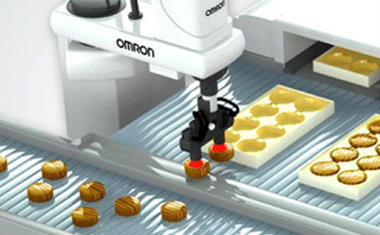
Cartesian robots have become a key element in industrial automation due to their simplicity and precision. These robots, also known as coordinate robots, stand out for their ability to move linearly along different axes, which allows them to perform specific tasks in sectors such as manufacturing, electronics, and robotics. In this article, we will explore what a Cartesian robot is, how it works, its features and components, as well as the main applications in which they are used.
What is a Cartesian robot?
A Cartesian robot is a type of industrial robot that moves along the three main axes of a Cartesian coordinate system: X, Y, and Z. It is often used in assembly and handling applications because it offers precision and control in each of its movements.
How does a Cartesian robot work and what are its main features?
The operation of a Cartesian robot is based on a linear coordinate system that allows it to move along three axes: X (horizontal), Y (vertical), and Z (depth). This type of robot is designed to move precisely in straight paths, making it an excellent option for tasks requiring repetition and accuracy.
Each axis is equipped with a motor that controls movement in that specific direction. For example, in a 2-axis Cartesian robot, movement occurs only along the X and Y axes, while in a 3-axis Cartesian robot, the Z-axis is added, enabling three-dimensional motion. This modular design makes Cartesian robots very versatile and easy to adapt to different industrial applications. Here are the 4 main features of these robots:
- Structural simplicity: Based on the Cartesian coordinate system, these robots have a relatively simple design compared to other types of robots, such as articulated robots.
- High precision: Thanks to their linear movement, Cartesian robots are extremely accurate, making them ideal for tasks that require exact positioning and object manipulation.
- Repetitive motion: These robots are designed to perform repetitive movements efficiently, making them perfect for assembly lines and automated industrial processes.
- Scalability: Cartesian robots can be configured with different numbers of axes (two, three, or more), depending on the application’s needs. For instance, a 2-axis Cartesian robot offers less flexibility than a 3-axis Cartesian robot, but may be sufficient for certain tasks.
Components of a Cartesian robot
Each Cartesian robot is composed of several fundamental parts, which work together to perform assigned tasks:
- Linear axes: These guide the robot’s movement along the three Cartesian planes (X, Y, Z). Depending on the number of axes, the robot will have different degrees of freedom. For example, a Cartesian robotic arm can operate on two or three axes, depending on its configuration.
- Motors: Motors, usually electric or pneumatic, provide the necessary force to move the axes. In most cases, each axis has its own motor, individually controlled to ensure precise movements.
- Controller: The controller is the “brain” of the robot. This device receives instructions, either from an automated program or an operator, and translates them into coordinated movements of the axes. It also adjusts parameters like speed and accuracy to optimize the task at hand.
- Guides or rails: The axes move along guides or rails that ensure straight, frictionless motion. These guides are essential to guarantee precision in the robot’s movements.
- Sensors: Many Cartesian robots are equipped with sensors that allow the exact position of the robotic arm to be verified and its trajectory adjusted as needed. These sensors are key to safety and efficiency in industrial environments.
Together, these components enable Cartesian robots to be indispensable tools in process automation, offering a reliable, scalable, and adaptable solution for various industries.
Applications and uses of Cartesian robots
Cartesian robots are common in sectors that require precision and repeatability in their processes. Below are some examples of industries where they are used:
- Electronics industry: Used in the manufacturing of circuits and small components due to their high precision.
- Manufacturing sector: Ideal for tasks such as assembly, welding, and material handling.
- Laboratory automation: In laboratories, they are used to perform repetitive tasks such as sample handling, minimizing human error.
The reason these robots are used in these industries is their ability to execute repetitive movements accurately and efficiently, optimizing time and resources. Other industries, where greater flexibility in movements or more complex tasks is required, tend to use other types of robots, such as articulated robotic arms.
In conclusion, the Cartesian robot is an essential tool in modern automation thanks to its simplicity and adaptability in industrial sectors that demand precision.